The Bug Egg in Grow A Garden costs 50,000,000 Sheckles and hatches one of five bug-type pets after 8 hours. Whether that's worth it depends entirely on what you hatch and what you plan to do with it. At the top end, a Dragonfly hatch is worth hundreds of trillions in trading value. At the bottom, you might pull a Caterpillar worth around 45 billion. That's a massive range, and the egg's low stock rate means you won't always get the chance to buy one anyway. Here's how to break down the real cost, understand what you're gambling on, and decide whether buying or farming around Bug Eggs makes sense for your situation, including seagull grow a garden bug outcomes. does bug egg grow a garden
Bug Egg Price and Cost in Grow a Garden: ROI Guide

Julian Russo
24 Mar 2026

What the Bug Egg actually is in Grow A Garden
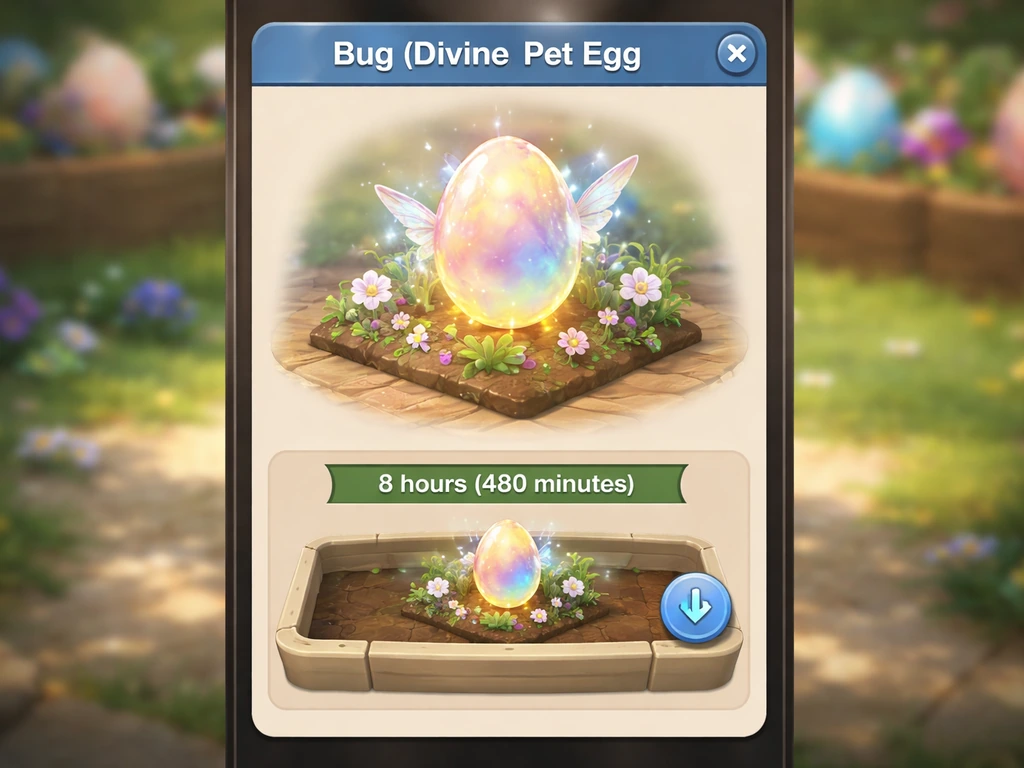
Bug Egg refers specifically to the Bug (Divine) Pet Egg sold at the Pet Egg Shop in Grow A Garden on Roblox. It has nothing to do with real-world gardening. The shop is run by an NPC named Raphael on the main map, and it displays 3 eggs at a time. Every 30 minutes, the shop refreshes and a new rotation of eggs appears. The Bug Egg has roughly a 3% chance of appearing in any given rotation, which makes it a rare sight. If you don't see it right now, you're waiting on RNG, not a fixed schedule. bug egg grow a garden
Once you buy the Bug Egg, it takes 8 hours (480 minutes) to hatch. Your egg slot situation matters here: if you only have one slot active and it's occupied by another egg, you're either waiting or burning an opportunity. Extra egg slots can be unlocked through the ascension shop, and for anyone seriously farming eggs, unlocking additional slots is a worthwhile early priority. More on timing strategy in a later section.
Bug egg price vs. cost: they're not the same thing
The shop price is straightforward: 50,000,000 Sheckles. Every major guide and the in-game wiki confirms this number. But the actual cost of a Bug Egg is higher than the sticker price once you account for everything involved.
First, there's the opportunity cost of your Sheckles. Fifty million is a significant amount of in-game currency, especially for newer players. Spending it on a Bug Egg means not spending it on crops, upgrades, or other eggs with more predictable returns. Second, there's the opportunity cost of your egg slot. Eight hours is a long hatch time. A slot occupied by a Bug Egg is a slot that isn't running a faster, more predictable egg during that window. Third, there's the time cost of catching the shop rotation. If you're manually checking the shop every 30 minutes trying to catch a 3% spawn, that's a real time sink. Practically speaking, the total cost of a Bug Egg includes 50M Sheckles, 8 hours of egg slot time, and however long it takes you to catch one in stock.
How to actually value a Bug Egg for profit

There are three lenses to evaluate a Bug Egg: sell value, hatch value, and opportunity cost. Sell value is simple: if you buy it and immediately resell or trade it, what's it worth? For most players, a 50M Sheckle purchase doesn't flip for a major premium on the market since supply is just rare enough to maintain some value, but it's not a guaranteed profit trade. The more important number is hatch value, which is a probability-weighted average of what you expect to get across all possible outcomes.
Using the most detailed probability set reported by the community (Snail 40%, Giant Ant 30%, Caterpillar 25%, Praying Mantis 4%, Dragonfly 1%), here's a rough expected value calculation using community trading values: Snail is worth around 35 billion Sheckles, Caterpillar around 45 billion, Giant Ant somewhere in a similar range, Praying Mantis around 15 trillion, and Dragonfly around 650 trillion. The Dragonfly and Praying Mantis entries absolutely dominate the expected value math even at 1% and 4% odds. The weighted average hatch outcome is heavily skewed by those rare results, meaning the Bug Egg is technically a high-EV gamble rather than a reliable income source.
Opportunity cost is the part most players skip. If you spend 8 hours hatching a Bug Egg and pull a Caterpillar worth 45 billion, but you could have used that slot to hatch two faster eggs with more predictable mid-tier pets, you may have actually lost value on net. Run this calculation for your specific farm situation before committing the slot.
When Bug Eggs are actually worth farming for
Bug Eggs make the most sense in three situations. One: you have multiple egg slots active and can afford to dedicate one to a long-hatch egg without slowing down your overall output. Two: you have enough Sheckles that 50M is not a meaningful percentage of your reserves (a good benchmark is having at least 500M to 1B before spending on Bug Eggs without financial stress). Three: you're specifically hunting for a Dragonfly or Praying Mantis because of their utility in your farm setup, and you're willing to run multiple hatches to get there.
Where Bug Eggs are less efficient is for players still scaling their garden who need reliable Sheckle returns. If you're at a point where the common hatch outcomes (Snail, Giant Ant, Caterpillar) would provide meaningful farming utility rather than just trading value, then even a non-rare result is useful. That's actually a reasonable entry point: if Caterpillar's growth speed boost or Snail's seed recovery would genuinely improve your farm, the 50M cost starts looking more justified even without hitting a Dragonfly.
What you can hatch from a Bug Egg and how it changes the math

Here are the five possible Bug Egg hatch outcomes, their approximate drop rates based on the most detailed community sources, and their practical value in the game.
| Pet | Approx. Hatch Chance | Trading Value (Community) | Primary Utility |
|---|---|---|---|
| Snail | ~40% | ~35 Billion Sheckles | Chance to recover seeds after harvest |
| Giant Ant | ~30% | Similar mid-tier range | Duplicates harvested crops with some probability |
| Caterpillar | ~25% | ~45 Billion Sheckles | Speeds up growth for leafy crops |
| Praying Mantis | ~4% | ~15 Trillion Sheckles | Boosts mutation chance in ~10-stud radius every ~80s |
| Dragonfly | ~1% | ~650 Trillion Sheckles | Periodically converts a random crop to a higher-value variant |
The practical takeaway here is that hatch value is bimodal. You're most likely to get a Snail or Giant Ant (roughly 70% combined), which are useful on the farm but not trading powerhouses. The Praying Mantis is a significant step up in value at 4%, and the Dragonfly at 1% is essentially a jackpot result. The Praying Mantis is particularly underrated for mid-game optimization because its mutation boost in a 10-stud radius on a roughly 80-second cycle can meaningfully improve the quality of your harvests over time, which compounds into more Sheckles without needing to trade the pet at all.
Note that hatch probability sets reported across different community sources vary. Some earlier sources listed Caterpillar at 40% and omitted Praying Mantis and Dragonfly entirely, suggesting either older data or simplified reporting. The five-pet set with Dragonfly at 1% appears in more recent and detailed community tracking, so treat any single source's probability numbers as approximate. The game also patches periodically, so these rates can shift. Check current community wikis and this site's dedicated egg guides for the latest confirmed numbers.
Strategies to squeeze more value out of Bug Eggs
Timing your hatch window
The 8-hour hatch timer is tied to your session activity. Community reports indicate the timer can pause when your plot isn't loaded or active, so if you start a Bug Egg hatch and log off, you may not be progressing the timer as fast as you think. To get consistent 8-hour hatches, you either need to stay active in-game or verify how your server handles timer progression when you're away. The most efficient approach is to start the hatch right before a long active session or at the start of a period where you know you'll be logged in.
Managing your egg slot inventory
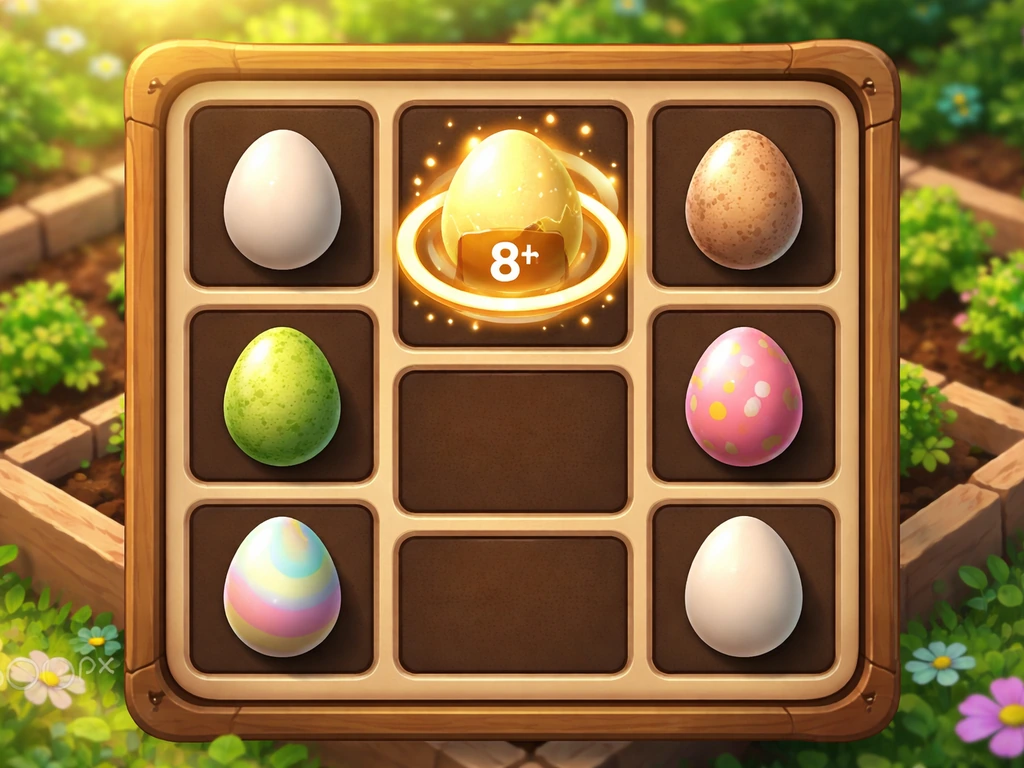
If you're running one egg slot, the Bug Egg's 8-hour hatch time is a real commitment. Unlocking additional egg slots through the ascension shop changes the equation entirely: you can run a Bug Egg in one slot and faster or more predictable eggs in the others simultaneously. For players doing multiple Bug Egg runs (chasing a Dragonfly or Praying Mantis), having 2 to 3 active slots is close to essential. Otherwise, the opportunity cost per attempt is too high relative to the small chance of a jackpot result.
Catching the Bug Egg in the shop rotation
With only a ~3% stock chance per rotation and a 30-minute refresh cycle, you could theoretically wait hours without seeing the Bug Egg appear. The practical strategy here is to check the shop whenever you're naturally active in the game rather than camping the NPC. The practical strategy here is to check the shop whenever you're naturally active in the game rather than camping the NPC. If you miss a rotation, the 30-minute window is short enough that regular play will eventually catch one. Some players use community Discord servers or fan sites to get alerts when rare eggs appear in rotations, which is worth looking into if you're actively hunting.
Stacking utility pets to compound returns
If you hatch a Praying Mantis, don't underestimate it as a trading chip. Its mutation boost in a 10-stud radius every 80 seconds is genuinely powerful for farm optimization. Combining a Praying Mantis with high-value mutation-responsive crops can increase your mutation rate significantly over a full play session. If you hatch a Praying Mantis, don't underestimate it as a trading chip. Its mutation boost in a 10-stud radius every 80 seconds is genuinely powerful for farm optimization. Combining a Praying Mantis with high-value mutation-responsive crops can increase your mutation rate significantly over a full play session. Similarly, a Giant Ant's crop duplication and a Caterpillar's leafy-crop growth boost both compound over many harvests. Don't reflexively sell or trade every hatch: sometimes keeping the pet and using it actively generates more value than the trading price implies. Don't reflexively sell or trade every hatch: sometimes keeping the pet and using it actively generates more value than the trading price implies.
Buy, farm, or skip? A quick decision checklist
Use this checklist to decide what to do with a Bug Egg the next time it shows up in your shop rotation.
- Check your Sheckle balance: if 50M is more than 10% of your current reserves, consider waiting until you have more cushion before buying.
- Check your egg slots: if your only slot is occupied by another egg with time remaining, weigh whether interrupting or waiting makes more sense given the 30-minute shop refresh.
- Decide your goal: are you hatching to use the pet on your farm, or to trade it? If you're using it, even a Snail or Caterpillar result is a win. If you're trading, you need to be comfortable with a ~70% chance of getting a low-value result.
- Calculate your session time: if you can't be active for the full 8-hour hatch window, confirm whether your server's timer progresses offline before committing the slot.
- If you have multiple egg slots and strong Sheckle reserves: buy every Bug Egg you see. At scale, the expected value math works in your favor across repeated attempts.
- If you're early-game or single-slot: consider whether a different egg type with faster hatch time and more predictable outcomes serves your farm better right now.
- After hatching: evaluate whether to use, trade, or sell the pet based on your current farm needs and the active market on your server before making a move.
The [Bug Egg](/egg-hatching-guide/anti-bug-egg-grow-a-garden) is one of the more high-variance purchases in Grow A Garden. For players with resources and egg slot capacity, it's absolutely worth running regularly: the Dragonfly and Praying Mantis outcomes are among the most valuable pets in the game, and even the common hatches provide real farm utility. For players still building their foundation, the 50M entry price and 8-hour commitment are real costs to weigh against alternatives. Know what you're buying, run the math for your situation, and you'll make the right call every time. [bug egg grow a garden snail](/egg-hatching-guide/bug-egg-grow-a-garden-snail)
FAQ
Is the 50,000,000 Sheckles price the only cost of buying a Bug Egg?
No. You also “spend” an 8-hour egg-slot window and you may lose time catching the shop rotation. If you are short on slots, the slot opportunity cost can outweigh the sticker price, even if the pet is valuable when sold.
What’s the best way to avoid wasting an egg slot while waiting for the Bug Egg hatch?
If you only have one active egg slot, only start a Bug Egg hatch when you know you will be logged in for the full 8 hours (or at least not idle/abandon the plot). With 2 to 3 slots, you can run Bug Eggs alongside faster eggs so a single long hatch does not stall your entire income stream.
If the Bug Egg hatching timer pauses when my plot is inactive, how can I test whether it’s happening to me?
Start a hatch, then force a controlled “inactive” period (leave and rejoin or unload the plot, depending on your normal behavior), and compare the remaining hatch time when you return. Use the test once before committing to repeated Bug Egg runs, since timer behavior can differ by server or your play patterns.
Should I buy a Bug Egg with the goal of selling it immediately for profit?
Usually it is not a guaranteed flip. Supply is rare enough to hold some value, but the sticker price does not ensure a premium resale. The more reliable evaluation is expected hatch value plus whether you personally benefit from using the pet’s farm effects rather than trading it away.
How many Bug Eggs should I run if I’m specifically hunting Dragonfly or Praying Mantis?
Treat it like a probability grind. With about 1% Dragonfly and 4% Praying Mantis per hatch attempt, you should expect many hatches before success. The practical decision is whether you can dedicate multiple egg slots and Sheckles without reducing your faster, steadier income during that hunt.
What should I do with common hatches like Snail or Giant Ant, should I sell them or keep them?
Don’t reflexively sell. If you are still optimizing your garden, the common outcomes can improve performance over many harvests, which can exceed trading value in net Sheckles. Use trading as an option, but compare it against how much the pet boosts your harvests in your current setup.
Does it matter if probability numbers change between community sources?
Yes. Expected value calculations depend on the assumed drop rates, and older trackers can omit outcomes or use outdated odds. Use a range (or a conservative set) when deciding, then verify the currently reported rates from active community wikis or dedicated egg guides before running lots of attempts.
Is camping the shop NPC a good strategy to find Bug Eggs faster?
Usually no. The shop refreshes on a fixed 30-minute rotation and the Bug Egg appears only about 3% of rotations, so camping can become a time sink with little return. It is more efficient to check during natural play sessions, and only consider alerts if your goal is truly to minimize waiting time.
If I missed a Bug Egg rotation, how long should I realistically expect to wait?
Because the drop is RNG per rotation, waits can vary widely. You might get lucky quickly, or you can go several rotations with nothing. Plan as if it could take multiple shop cycles before a purchase opportunity appears, especially if you are only online intermittently.
At what point does a Bug Egg become “worth it” for my garden progression?
A good rule is whether even the non-jackpot outcomes would meaningfully help your farm, not just produce tradable pets. If 50M Sheckles would otherwise fund upgrades, faster eggs, or crop improvements that raise your baseline income, delay Bug Eggs until you have enough reserve (often hundreds of millions to around a billion) and enough slot capacity to avoid stalling faster production.
What’s the fastest way to determine whether a Bug Egg run makes sense for my specific account?
Do a quick slot-level ROI check: estimate how much you earn by using that egg slot for the next-best faster option during the 8-hour window, then compare it to (expected hatch value, using your preferred drop-rate set) plus whether you will keep the pet for farm effects. If the slot opportunity cost is larger than the marginal benefit, skip the Bug Egg for now.
Next Article
Bug Egg Grow a Garden Snail: Step by Step Guide
Step-by-step guide to Grow A Garden bug egg mechanics, hatching garden snails fast, and troubleshooting growth failures.